Trails & reserves
People counting for trails, parks and reserves
Weatherproof counters measure how many people and cyclists use your trails and open spaces, even where there is no power or network, so you can plan, fund and maintain them with evidence.
The challenge
Open space is funded on guesswork.
Trail and open-space managers fund, maintain and justify large networks of paths and reserves with almost no hard data on how many people use them, when, or how. Visitation is invisible, seasonal and spread across unstaffed sites, so budgets, grant bids and maintenance rest on one-off surveys or gut feel.
Continuous, anonymous counting turns an intangible public good into evidence you can take to a funding body, a councillor or a works schedule.
What you can measure
The data you get from day one.
Visitor counts
People and cyclists entering each trail or reserve, by hour, day and season.
Direction & flow
Which way people travel, and loop versus out-and-back behaviour.
Mode split
Pedestrians, cyclists and scooters counted separately where it matters.
Peak periods
Busiest times, days, weekends and holiday periods.
Year-on-year trend
Growth or decline over months and years, and against weather.
Event uplift
The lift from a new track, dog park or programmed activity.
Site comparison
How each trail, entrance or reserve performs against the others.
Visitor-economy estimate
Counts turned into regional-spend figures for funding cases.
Ways to use it
How councils and land managers put the data to work.
Win capital funding
Attach visitation evidence to grant and capital-works bids. Funders increasingly expect data, and councils report extra funding followed once usage was proven.
Target maintenance
Schedule mowing, surfacing, bin servicing and inspections by real load and high-wear segments, not a blanket calendar.
Size shared paths
Use the pedestrian-versus-cyclist split, direction and speed to reduce conflict and justify cycleway investment.
Protect sensitive areas
Detect over-use of fragile natural areas and support carrying-capacity decisions.
Prove the case cheaply
Run a temporary or mobile count to inform a specific business case before committing to permanent sensors.
Report to the community
Show councillors and ratepayers how the open-space budget is used, year on year.
Business impact
Make more money, save money and improve experiences.
Make more money
- Win state and federal capital-works and infrastructure grants with data-backed bids.
- Support concession, lease and event decisions with real demand evidence.
- Build visitor-economy and tourism cases from counts and spend estimates.
- Prioritise the capital pipeline toward the places people actually use.
Save money
- Target maintenance, surfacing and servicing to real load, not fixed cycles.
- Right-size ranger and staff presence to the busy periods.
- Use temporary counts to acquire data cheaply before buying permanent sensors.
- Avoid over-building facilities where demand does not support them.
Improve experiences
- Ease crowding and improve safety at popular trailheads.
- Put toilets, parking and signage where people actually go.
- Reduce pedestrian and cyclist conflict on shared paths.
- Show the community the value and use of its open spaces.
Related
Where this fits.
This is part of how we help parks, trails and streets and councils. See the sensors we use outdoors.
FAQ
Questions & answers
Can you count people on trails without power or internet?
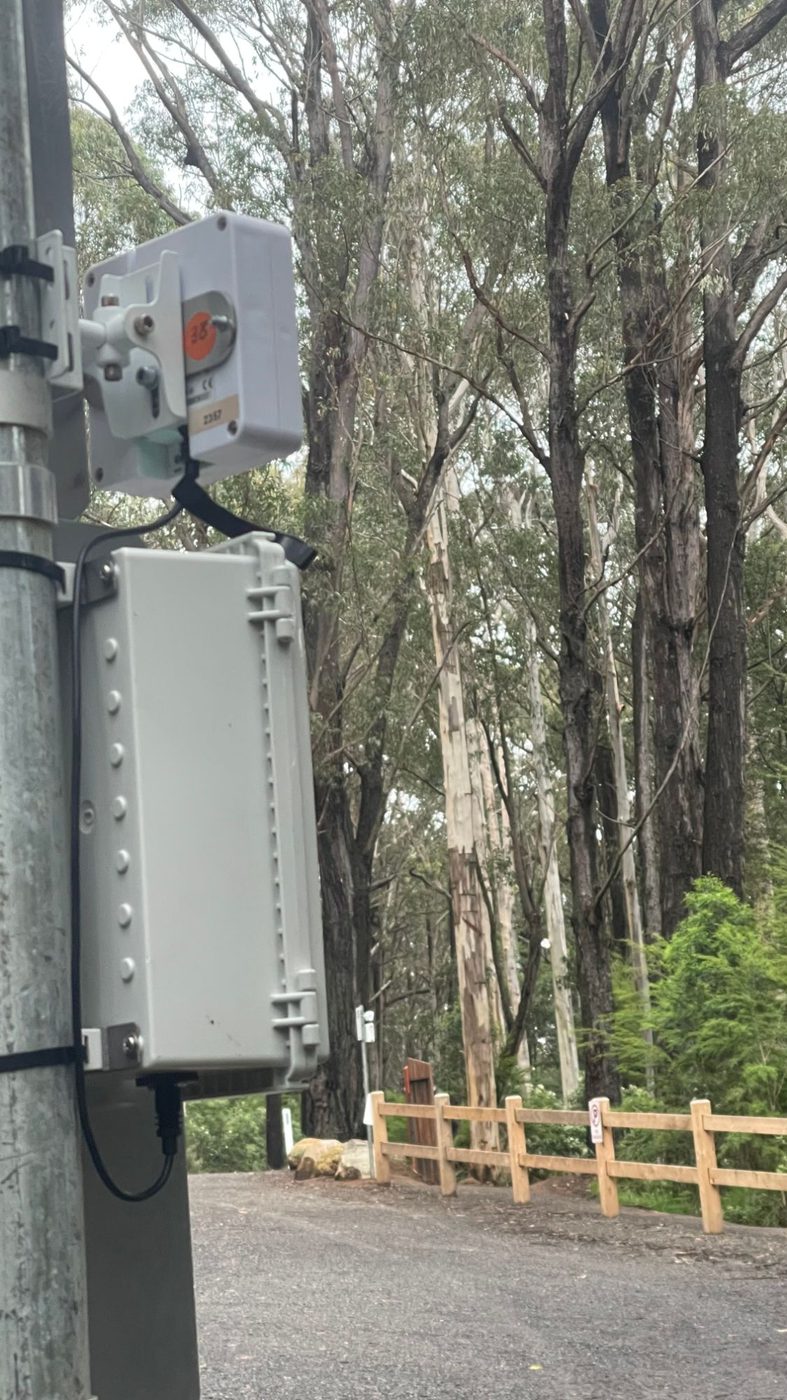
Yes. Outdoor counters run on battery, solar and mobile data, so they work on remote trails and reserves with no fixed power or network.
How accurate are outdoor counts?
Raw sensor counts can undercount, especially in groups, so accuracy comes from calibrating against manual counts and applying a correction factor per site. We are transparent about this rather than quoting a single headline figure.
Do the counters tell pedestrians and cyclists apart?
Yes. Multi-modal sensors separate pedestrians, cyclists and scooters, with direction and speed, so shared paths and access roads are measured accurately.
Will the data actually help us win grants?
It is used as supporting evidence in capital and infrastructure bids, which funders increasingly expect. It does not guarantee a grant, but it materially strengthens the case.
Is the counting anonymous?
Yes. People are counted as anonymous shapes and movement. No images or personal information are captured.
See your places in a new light.
Book a 30-minute walkthrough and we'll scope a pilot for one of your sites: sensors, installation, software and insights in one agreement.