Streets & laneways

Pedestrian counting for streets and laneways.

Measure pedestrian activity in streets, laneways, plazas and town centres, hour by hour, and see how places change over time.

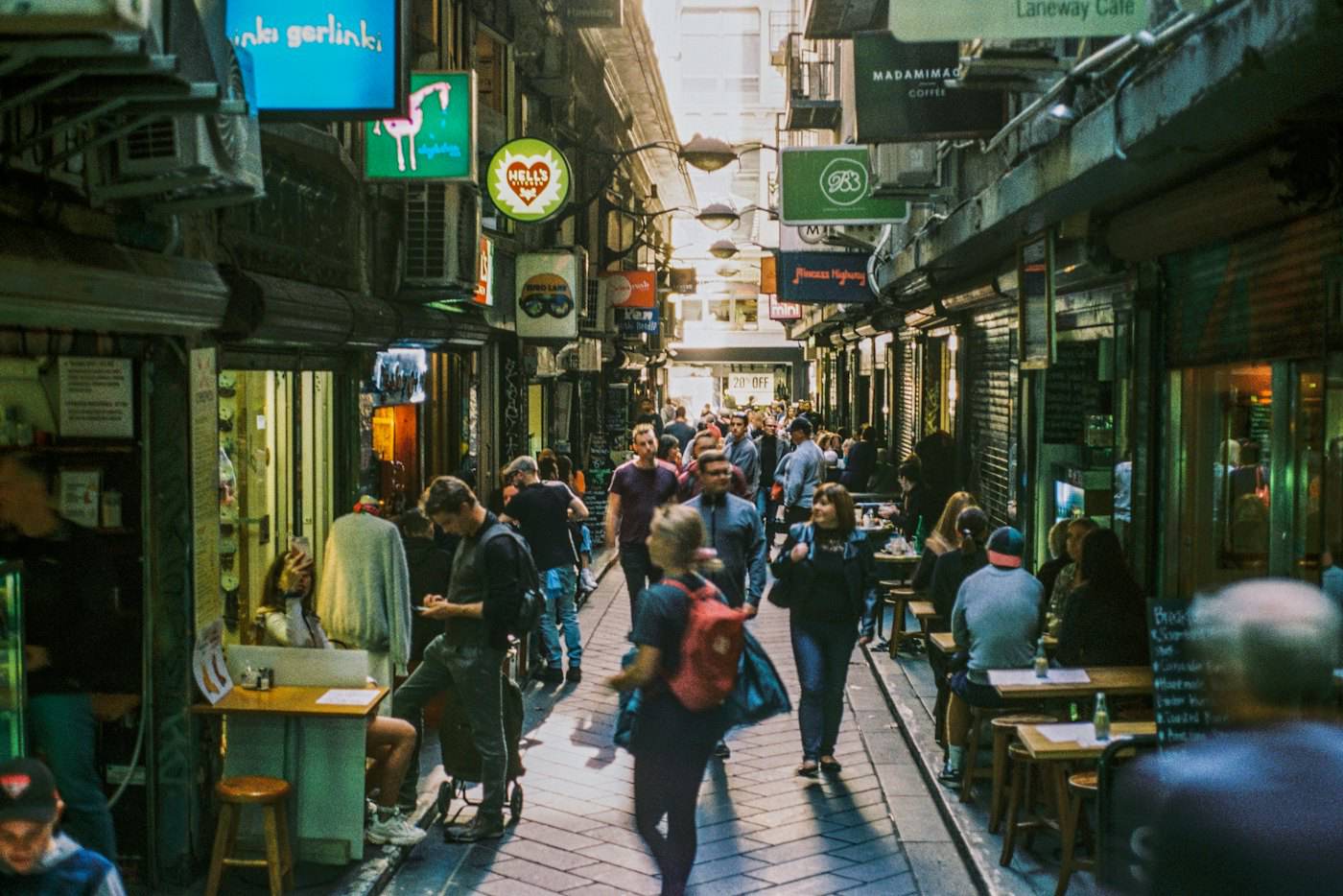
Busy Melbourne laneway with cafes
Pedestrian countsPictured: Melbourne, VIC

Why measure

Busy streets are the sign of a healthy place.

Pedestrian activity is one of the clearest signs of a thriving town centre or precinct. Councils, place managers and business associations use it to understand how streets are used, measure the effect of events and investment, and support economic development.

Activity by hour, day and season

Sensors at key points count pedestrians and their direction, showing how activity varies through the day, across the week and between seasons. Peak-period views show the busiest times for cleaning, safety and events.

Events and change

Comparing activity during events, festivals or promotions with normal patterns shows their impact. Measuring before and after streetscape works shows how a project changed the way people use an area. Read more about counting in parks, trails and streets.

Connected to the wider precinct

Street counts sit alongside shopping centre footfall and park visitation in one platform, so precinct managers and councils can see the whole picture.

Typical uses in streets

Place managers report on town centre activity, economic development teams track the recovery or growth of precincts, event teams measure festival attendance, and transport planners use pedestrian volumes to prioritise crossings, footpath widening and lighting.
In practice

How it works on site.

Sensors count people as they move through each space. Counting happens on the device, and the numbers appear in the platform within seconds.

Animated illustration of a laneway with a pole-mounted pedestrian counter and people walking both waysPedestrian counter+1+1Pedestrians today8,412Peak ยท 12:30pm
Streets and laneways: pedestrian counts by hour and direction.

What you can measure

The numbers that matter here.

Pedestrian counts

Volumes by location and direction.

Peak periods

Busiest hours by day.

Seasonal trends

Change across months and years.

Learn more

Event impact

Activity during events vs normal.

Before and after

The effect of streetscape projects.

Learn more

Cyclists & vehicles

Optional counting where needed.

Learn more
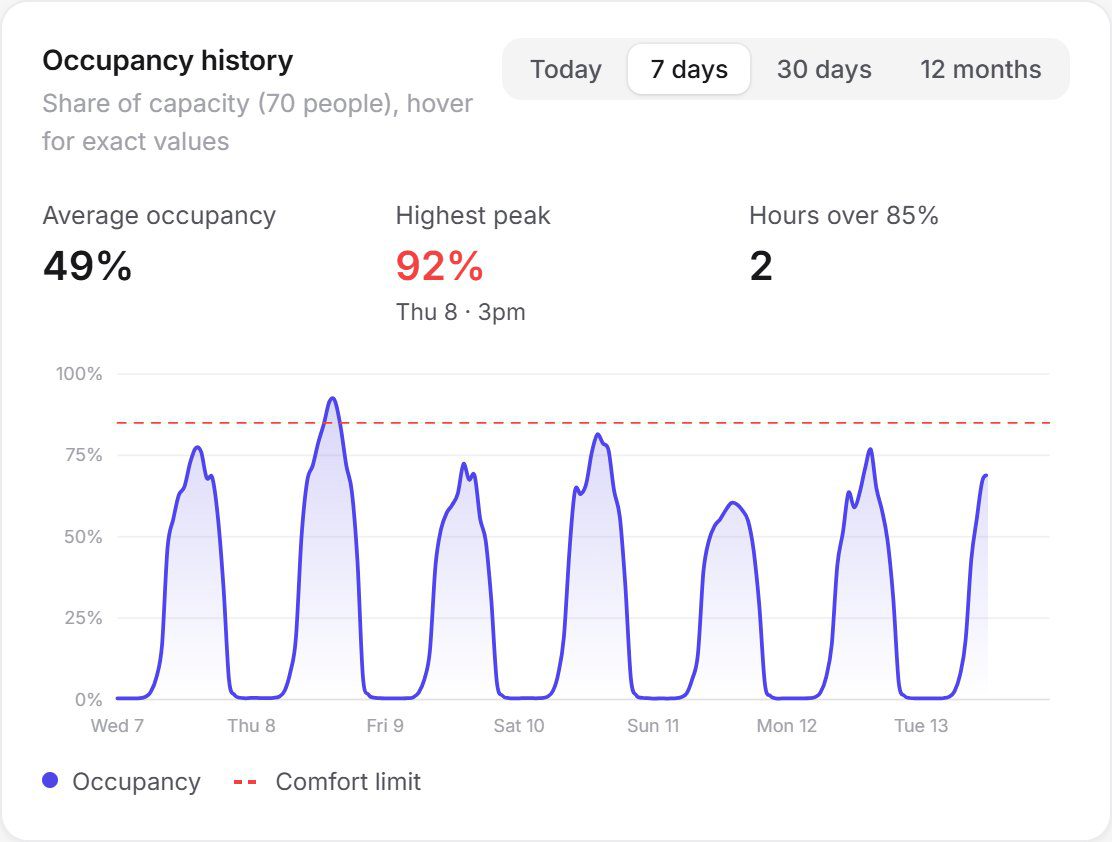
Activity trend for a street location across a week

In the platform

Patterns you can plan around.

Hour-by-hour history shows the rhythm of each street, from the morning commute to the evening dining peak, and how it shifts across the week.

How it is installed

From site survey to live data.

Our Australian team designs, installs and supports every deployment, so you deal with one partner from the first survey to ongoing maintenance.

How the platform works

  1. Survey. We identify counting points, mounting options, power and connectivity for each street location.
  2. Select. The right sensor is chosen for the environment, including options for poles, awnings and building facades.
  3. Install and calibrate. Devices are installed and checked against manual counts.
  4. Support. Device health is monitored remotely, with local support when something needs attention.

FAQ

Questions & answers

How are pedestrians counted on a street?

Sensors mounted on poles, awnings or facades count pedestrians passing a point and their direction, using technology chosen for each location.

Can it measure the impact of an event or streetscape project?

Yes. Comparing activity during an event, or before and after a project, with normal patterns shows the change it created.

Does street counting record images of people?

No. Counting is processed on the device and only anonymous counts are transmitted.

Can it count cyclists and vehicles too?

Yes. Cyclist and vehicle counting can be added at locations where it is needed.

How many counting points does a street need?

It depends on the questions you want to answer. A site survey identifies the points that capture the main pedestrian flows, often entrances to a precinct and key intersections.

Can street counts be compared with nearby centres?

Yes. Street counts sit alongside shopping centre footfall and park visitation in one platform, so the whole precinct can be compared.

See your places in a new light.

Book a 30-minute walkthrough and we'll scope a pilot for one of your sites: sensors, installation, software and insights in one agreement.