Campuses

Space utilisation for university campuses.

See how lecture theatres, labs, libraries and study spaces are really used, compare bookings with reality and plan the estate on evidence.

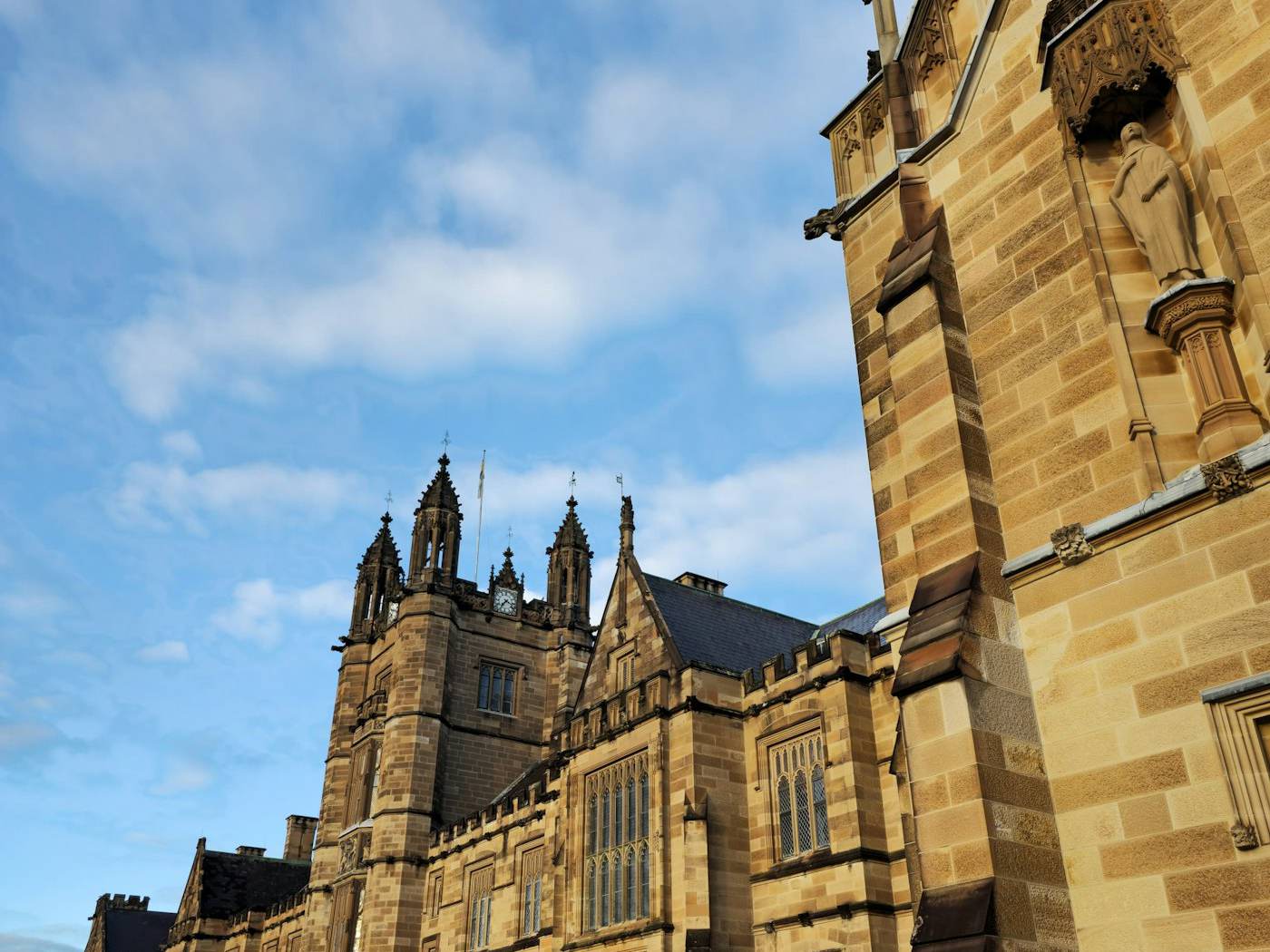
Sandstone university quadrangle in Sydney
Room & space utilisationPictured: Sydney, NSW

Why measure

Bookings show intent. Sensors show reality.

Most campus space decisions are made from timetables and booking systems, which record what was reserved rather than what was used. Rooms booked for a class of eighty may regularly hold thirty, while popular study spaces overflow at exam time. Measuring actual occupancy closes that gap.

Utilisation room by room

Sensors measure how many people are in each lecture theatre, tutorial room, lab and study area throughout the day. Combined with capacity, that gives true utilisation by room, building and time of week, which timetabling and estates teams can use to right-size allocations. Read more about space utilisation for universities.

Helping students find space

Live occupancy on interactive floorplans can show students which study rooms and library areas have space right now, spreading demand across buildings. Campus libraries use the same data for staffing and opening hours.

Planning the estate

Semester-on-semester trends and demand forecasts show whether a new building is really needed, or whether better use of existing space would meet demand. All counting is anonymous, as explained in privacy by design.

Typical uses on campus

Estates teams use utilisation data to consolidate under-used rooms, timetabling teams to match class sizes to rooms, library teams to plan exam-period hours, and student services to publish live study space. Facilities teams use visit counts to schedule cleaning in high-traffic buildings, and safety teams use live occupancy for large lecture theatres and event spaces.
In practice

How it works on site.

Sensors count people as they move through each space. Counting happens on the device, and the numbers appear in the platform within seconds.

Animated illustration of a lecture theatre and study space with room occupancy counted at the door3D people counterIN +1OUT +1Lecture theatre34% · 82 of 240Study space14 seats freeBooked 240 · used 82
Campuses: booked versus used, room by room.

What you can measure

The numbers that matter here.

Utilisation %

Frequency and occupancy combined, per room and building.

Learn more

Booked vs used

Rooms reserved but empty, and classes that need a different size.

Live study space

Free and busy study areas right now, on floorplans.

Learn more

Peak periods

Busiest hours by weekday, week of semester and exam period.

Dwell time

How long students stay in each study space.

Semester trends

Week, month and year comparisons across the academic calendar.

Learn more
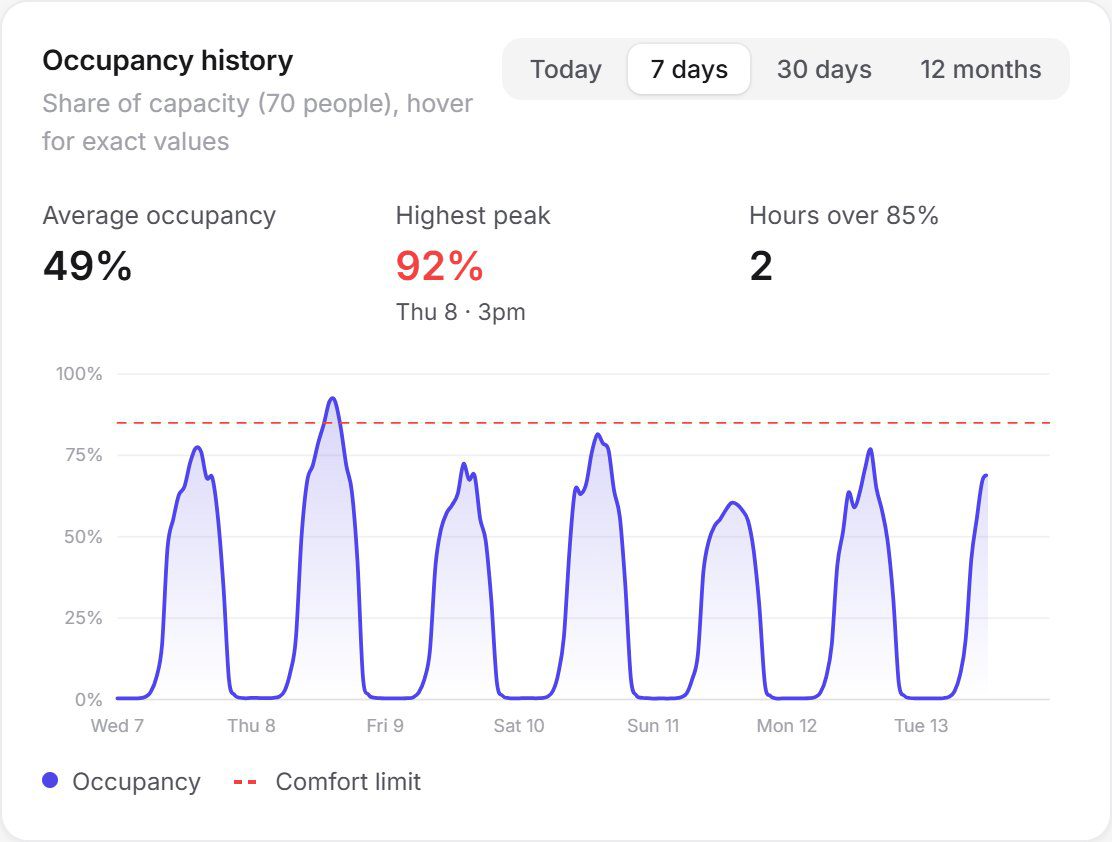
Occupancy history for a campus building across a week

In the platform

See a whole week at a glance.

Occupancy history by hour and day shows how each building and room is used across the week, with comfort thresholds marked, so under-used and over-crowded spaces stand out immediately.

How it is installed

From site survey to live data.

Our Australian team designs, installs and supports every deployment, so you deal with one partner from the first survey to ongoing maintenance.

How the platform works

  1. Survey. We assess entrances, ceiling heights, layout, lighting, power, network and privacy needs.
  2. Design. A sensor plan places 3D people counters at entrances and over the zones you want to measure.
  3. Install and calibrate. Devices are installed, commissioned and checked for accuracy against manual counts.
  4. Support. Every device reports a heartbeat, and our team is alerted if one needs attention.

FAQ

Questions & answers

How do you measure space utilisation on a university campus?

Sensors count how many people are in each room or zone throughout the day. Comparing measured occupancy with each room's capacity and its bookings shows true utilisation by room, building and time of week.

Can students see which study spaces are free?

Yes. Live occupancy can be shown on floorplans so students and staff can see which study rooms and library areas have space right now.

Does campus people counting identify students?

No. Counting is processed on the device and only anonymous numbers are sent, with no images or personal information collected.

Can utilisation data support capital planning?

Yes. Trends and forecasts show whether more space is genuinely needed or existing space could be used better, before committing to new buildings.

Can it measure lecture theatres and labs as well as study spaces?

Yes. Any room or zone can be measured, from large lecture theatres to labs, tutorial rooms, libraries and informal study areas, with each one shown on its building floorplan.

How long before utilisation data is useful?

Live occupancy is available as soon as sensors are commissioned. Patterns become clear within a few weeks, and a full semester gives a reliable picture for timetabling and estate planning.

See your places in a new light.

Book a 30-minute walkthrough and we'll scope a pilot for one of your sites: sensors, installation, software and insights in one agreement.