Guide
Measuring space utilisation on campus.
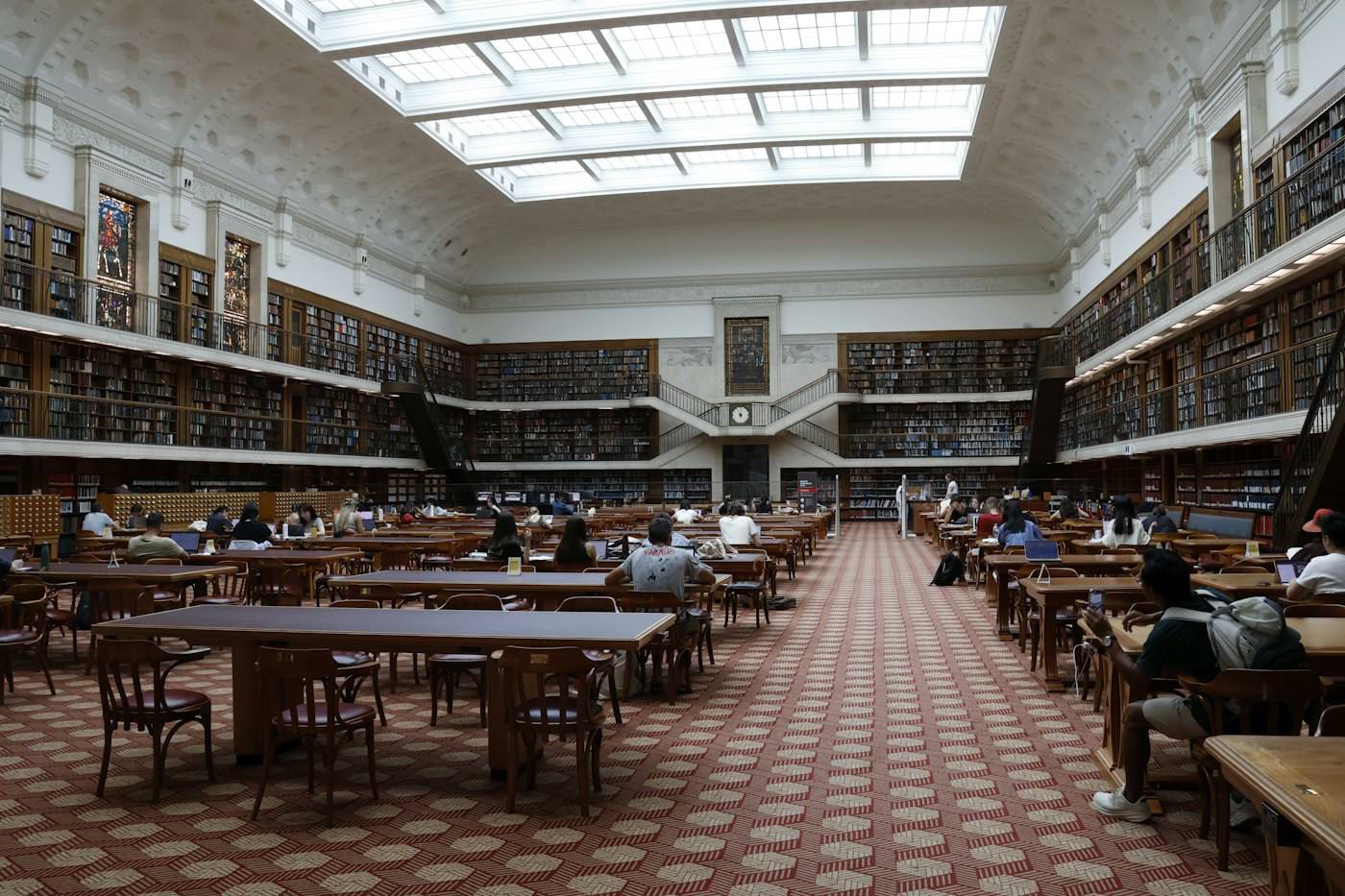
Universities manage large, expensive estates, yet booking systems only show what was reserved, not what was used. Measured occupancy closes that gap, showing how lecture theatres, tutorial rooms, labs, libraries and informal study spaces are really used across the week and the semester.
Utilisation you can act on
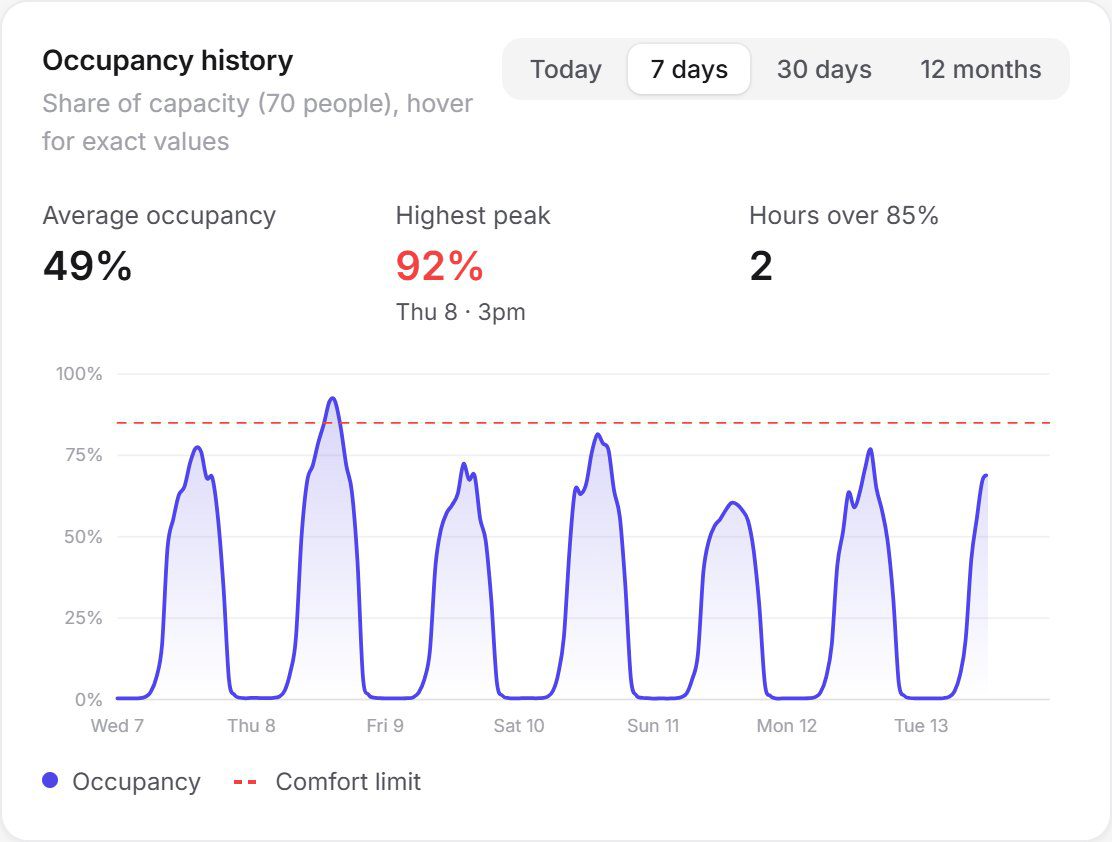
Utilisation combines frequency (how often a room is used) with occupancy (how full it is when used). Sensors provide both, room by room and hour by hour, so timetabling teams can move classes into right-sized rooms and free up space that is booked but empty. Read more about measuring campuses.
A better student experience
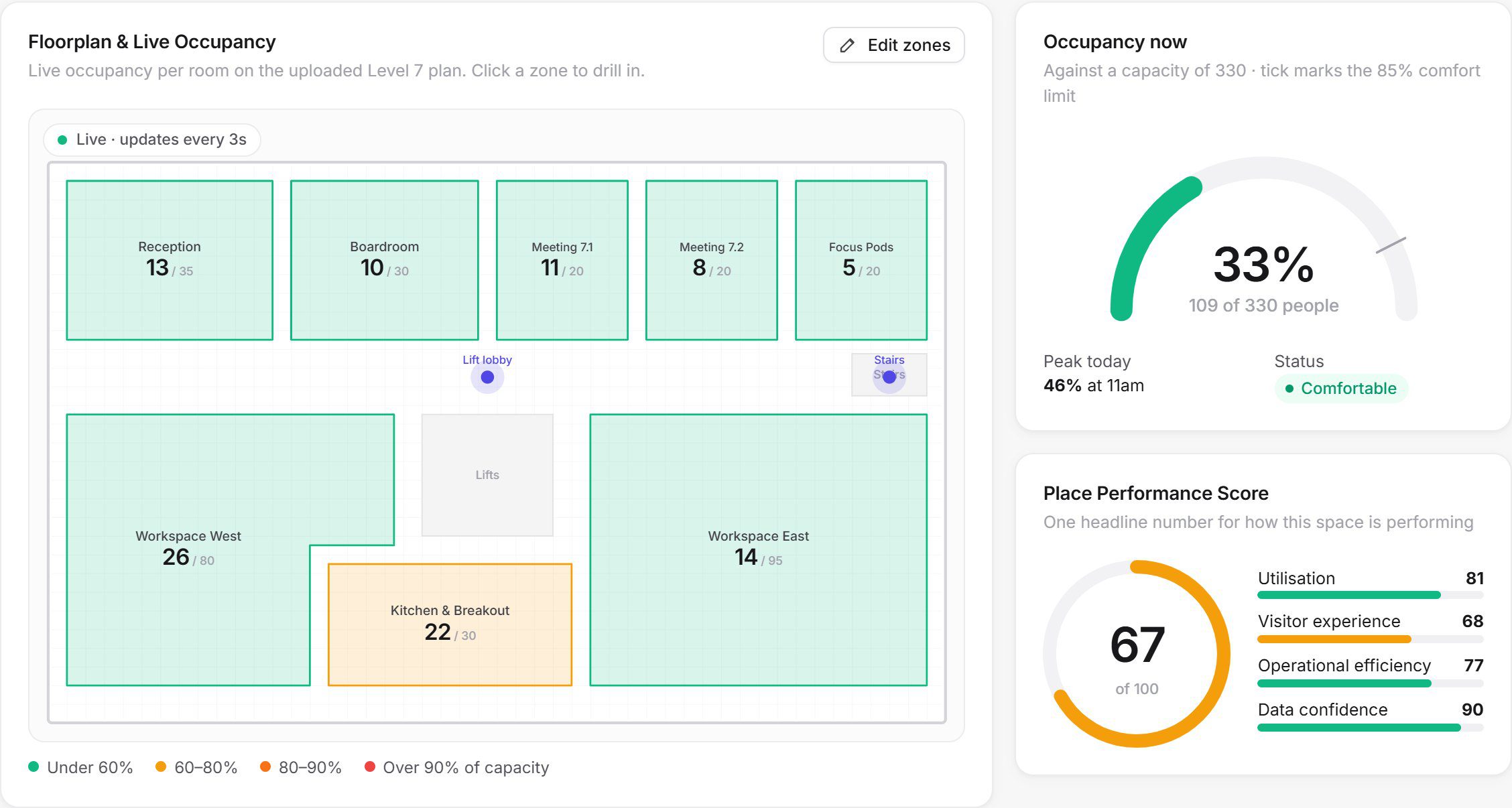
Live occupancy on floorplans can show students where free study space is right now, reducing time spent searching and spreading demand more evenly across buildings. University libraries use the same data to staff help desks and plan opening hours around exam periods.
Capital planning on evidence
Before committing to a new building, utilisation trends and demand forecasts show whether more space is really needed or existing space could be used better. After a refurbishment, before-and-after analysis shows whether it worked. These capabilities sit in the Executive level on the plans page.
Anonymous by design
No individual students are identified. Counting runs on the device and only anonymous numbers leave each building, as described in privacy by design.